
#3: The Boy In The Bubble by Paul Simon
City: Burnaby, BC
Radio Station: CFML
Peak Month: April 1987
Peak Position in Burnaby ~ #2
Peak Position in Vancouver ~ #32
Peak Position on Billboard Hot 100 ~ #86
YouTube: “The Boy In the Bubble”
Lyrics: “The Boy In The Bubble”
Paul Frederic Simon was born in 1941 in Newark, New Jersey, to Hungarian-Jewish parents. His dad was a bandleader who went by the name Lou Sims. When he was eleven years old he met Art Garfunkel and were both part of a sixth grade drama production of Alice In Wonderland. By 1954 Paul and Art were singing at school dances. In 1957, in their mid-teens, they recorded the song “Hey, Schoolgirl” under the name “Tom & Jerry”, a name that was given to them by their label Big Records. The single reached #49 on the pop charts.
Simon released “Teen-Age Fool” in 1958 under the pseudonym of True Taylor. The single was not a hit. In 1961 he released “Motorcycle” under the name Tico and the Triumphs. The tune made it to #99 on the Billboard Hot 100. That musical experiment disbanded after two more single releases that were both flops. Simon also released ten singles between 1959 and 1962 under the pseudonym Jerry Landis. He had one minor regional hit in 1962 titled “The Lone Teen Ranger” which made the Top Ten in Miami and Newport News (VA). Meanwhile, both Paul Simon and Art Garfunkel studied at university and got Bachelor’s Degrees.
In 1964 Simon and Garfunkel got a record contract with Columbia Records. In the fall they released their debut album Wednesday Morning, 3 A.M. The album contained a track titled “The Sounds Of Silence”. However, the album was a commercial failure. Paul Simon moved to England and Garfunkel pursued studies at Columbia University. While in England Paul Simon co-wrote “Red Rubber Ball”, a hit for the Cyrkle in the spring of 1966. Otherwise, that would have been the end of their musical careers except “The Sounds Of Silence” began to get requests from buyers of the album in a few radio markets in Massachusetts and Florida by the spring of ’65. Consequently, “The Sounds Of Silence” was re-recorded in June 1965 and re-issued in September. The song went to number one in November ’65 in Boston, Miami and Providence (RI). It got picked up across the nation and became number one on the Billboard Hot 100 on January 1. It got knocked out of the top spot by the Beatles “We Can Work It Out”, bur returned to the number one spot on January 22nd. It finally peaked at number one in Los Angeles for the first two weeks in February.
With “The Sounds Of Silence” climbing the pop charts across America in the fall-winter of ’65, Simon and Garfunkel reunited. The number one single, owing to its significant chart run in 1965, was the number 54 song of the year in 1966. In mid-December 1965, Simon and Garfunkel went to the studio to record their second album, Sounds Of Silence. The album also included “I Am A Rock”. The track had been included in an album Paul Simon released in the summer of 1965 in the UK only titled The Paul Simon Songbook. In the spring of 1966, “I Am A Rock” became their third single release. The Paul Simon Songbook also included songs the duo re-recorded for Sounds Of Silence: “Kathy’s Song”, “A Most Peculiar Man”, “Blessed”, “Leaves That Are Green” and “April Come She Will”.
From their third album, Parsley, Sage, Rosemary and Thyme, came “Homeward Bound”. The single was released in mid-January 1966, six months before the rest of the tracks on the album were recorded. “Homeward Bound” climbed to #5 on the Billboard Hot 100 and was the #56 song of the year. “I Am A Rock” peaked at #3 and ranked #51 for the year 1966. In the fall of 1966, the duo also released “The Dangling Conversation” from Parsley, Sage, Rosemary and Thyme, and “A Hazy Shade Of Winter” from the Bookends album, just one month apart. The latter single climbed to #13 but “The Dangling Conversation” stalled at #25.
In December 1966 Vancouver (BC) was one of the radio markets where the promotional single “7 O’Clock News – Silent Night”, from Parsley, Sage, Rosemary and Thyme, climbed to #29. Two more singles from Bookends were Top 30 hits in 1967: “At The Zoo” at #16 and “Fakin’ It” at #23. Next up, the baroque pop tune “Scarborough Fair/Canticle” climbed #11 on the Billboard Hot 100 in April ’68.
On December 22, 1967, a film was released called The Graduate starring Dustin Hoffman and Anne Bancroft. It became a huge box office hit. With figures adjusted for inflation, the film grossed $805 million, making it the 23rd biggest All-Time grossing film. All the songs for the soundtrack were written by Paul Simon, including “The Sounds Of Silence”, “Scarborough Fair/Canticle” and “Mrs. Robinson”. The latter song became a number one hit in America for three weeks in June. “Mrs. Robinson” won the duo Grammy Awards in 1969 for both Record of the Year and Best Pop Performance by a Duo or Group with Vocals. And the soundtrack for The Graduate won them a Grammy for Best Score Soundtrack for Visual Media.
In November 1968 Simon and Garfunkel recorded “The Boxer”, which would become the first track recorded for their 1970 album release Bridge Over Troubled Water. The single was a Top Ten hit in the spring of ’69. But it was the title cut that became their biggest hit, spending six weeks at number one from late February into April 1970. The song was ranked number one for the year 1970. “Bridge Over Troubled Water” won Simon and Garfunkel Grammy Awards in the categories of Record of the Year, Song of the Year and Best Contemporary Song. While the album won Album of the Year and Best Engineered Album – Non-Classical.
Other singles from the album included “Cecilia” and “El Condor Pasa”. The recording of Bridge over Troubled Water was difficult and Simon and Garfunkel’s relationship had deteriorated. “At that point, I just wanted out,” Simon later said. The duo split up in April 1970. Aside from a benefit concert in support of the George McGovern presidential candidacy for the Democratic Party in June 1972, Simon and Garfunkel hardly spoke to each other for a number of years.
In early 1972 Paul Simon released his second solo album, Paul Simon. The debut single, “Mother And Child Reunion” climbed to #2 in Vancouver (BC) and #4 in the USA in March 1972. His followup single was another family-themed lyric titled “Me And Julio Down By The Schoolyard”.
In 1973 Paul Simon released his third solo album There Goes Rhymin’ Simon. It included two tracks that became big hit singles in 1973: “Kodachrome” and the gospel-infused “Loves Me Like A Rock”. The album was nominated for Album of the Year and Simon also was nominated in the Best Male Pop Vocal Performance category. The former was given to Stevie Wonder for Innervisions, and the later was won by Stevie Wonder of “You Are The Sunshine Of My Life”.
In 1975 Simon and Garfunkel reunited to record “My Little Town”. The single was nominated for a Grammy Award in 1976. In 1976 Simon won two Grammy Awards (Album of the Year and Best Male Pop Vocal Performance) for his 1975 album Still Crazy After All These Years. The album included “50 Ways To Leave Your Lover” which became his only number hit single in February 1976. The song was nominated for Record of the Year at the Grammy Awards in 1977. That year he had another Top Ten hit titled “Slip Sliding Away.”
In the 1980s Paul Simon was recognized again at the Grammy Award with another nomination in hte Best Male Pop Vocal Performance category for “Late In The Evening”. Though he struggled with his next two albums, in 1986 he released Graceland. The album won a Grammy for Album of the Year and Simon got another Grammy nomination for Best Male Pop Vocal Performance. And at the 1987 Grammy Awards Paul Simon got a nomination for Song of the Year and won a Grammy for Record of the Year, both for “Graceland”.
From Graceland came several single releases including “You Can Call Me Al”, “Graceland”, “Diamonds On The Souls of Her Shoes”, “Under African Skies” and “The Boy In The Bubble”.
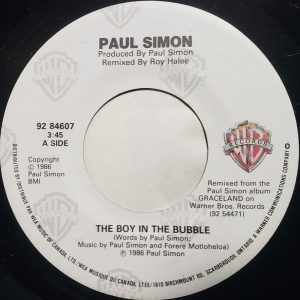
Paul Simon wrote the lyrics for this song when he returned to America after his 1985 trip to South Africa.While in South Africa his concern was recording the music. The words had to intertwine with the complex track that Simon’s producer Roy Halee assembled from the reels of tape they returned with. It took Simon a long time to finish the lyrics, working in clever lyrical phrases like “the boy in the bubble and the baby with the baboon heart” in a way that would mesh with the African rhythms.
The words were not specifically about Simon’s African experience, but more about his own observations that life is filled with so much potential (days of “miracle and wonder”) but also so many challenges. Speaking with Rolling Stone, he explained, “‘The Boy In The Bubble’ devolved down to hope and dread. That’s the way I see the world, a balance between the two, but coming down on the side of hope.”
The dread is seen through anecdotes Paul Simon tells, like the lines that open the song:
It was a slow day and the sun was beating
on the soldiers by the side of the road.
There was a bright light, a shattering of shop windows,
the bomb in the baby carriage was wired to the radio.
Simon notes the increasing overload of information in a changing world: “staccatos signals of constant information.” He also weaves in contrasts where one moment we notice the “dead sand falling on children” and then “a loose affiliation of millionaires and billionaires.”
Paul Simon had to navigate a political minefield when he traveled to South Africa. There was a United Nations cultural boycott in place that was designed to pressure political leaders into giving up their racist Apartheid policy. The crux of the boycott was keeping popular musicians away from places like Sun City where they played to the white ruling class in South Africa. The problem was that any violation of the boycott could undermine the sanctions, and many locals were not happy with Simon’s visit.
There was also the contention that Simon was using African talent for personal gain – just another white guy pillaging their people – but Simon paid the musicians well and gave songwriting credits to the authors of the songs he based his tracks on; “The Boy in the Bubble” is credited to Simon and Forere Motloheloa.
The song retains the only lyric Simon managed to compose on his South African trip: “The way the camera follows us in slo-mo, the way we look to us all.” The imagery in the video was inspired by film clips of the assassination of U.S. president John F. Kennedy (November 22, 1963), and attempted assassination of Ronald Reagan (March 30, 1981).
The title and key lyric—”Think of the boy in the bubble”—draw directly from the widely publicized story of David Vetter (1971–1984), an American child born with severe combined immunodeficiency (SCID), a condition that left him with virtually no immune system. David lived his entire 12 years in a sterile plastic isolator (often called a “bubble”) at Texas Children’s Hospital to protect him from infections, which would have been fatal. He became known in the media as “the boy in the bubble.”
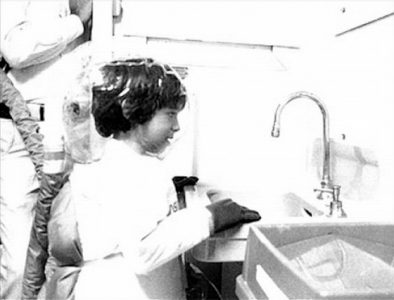
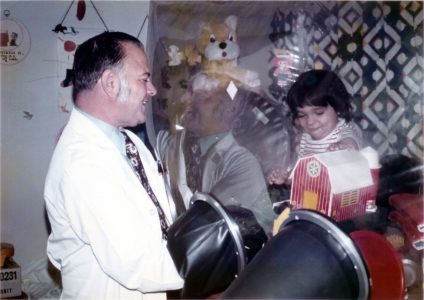
Images of David Vetter (above)David Vetter’s case gained massive attention, including inspiring a 1976 TV movie starring John Travolta. He died shortly after a failed bone marrow transplant in 1984, just two years before.
Cashbox magazine said of “The Boy In The Bubble” the song is “another brilliant cross-cultural gem. African rhythms, zydeco spice and Simon’s intelligent, penetrating lyrics are near perfection.”
“The Boy In The Bubble” reached #2 in Burnaby (BC), #4 in San Francisco, and #10 in Montreal and Boulder (CO). It stalled at #86 on the Billboard Hot 100.
In succeeding years Paul Simon was nominated again for Album of the Year at the Grammy’s in 1992 for The Rhythm of the Saints and in 2001 for You’re The One.
In 2006 Time magazine named Paul Simon in its feature issue “100 People Who Shaped the World”. In 2012 Paul Simon told Rolling Stone “One of my deficiencies is my voice sounds sincere. I’ve tried to sound ironic. I don’t. I can’t. Dylan, everything he sings has two meanings. He’s telling you the truth and making fun of you at the same time. I sound sincere every time.” In 2013 Paul Simon released his thirteenth studio album titled Stranger to Stranger. The album debuted on the Billboard 200 Album chart at #3. In 2018, his most recent studio album release, In the Blue Light, received critical acclaim, but earned only modest sales. He announced in February 2018 that he was retiring from touring.
February 16, 2026
Ray McGinnis
References:
“Paul Simon Biography,” Paul – Simon.info
Geoffrey Himes, “How “The Sound of Silence” Became a Surprise Hit,” Smithsonian Magazine, January, 2016.
Robin Denslow, “Paul Simon’s Graceland: the Acclaim and the Outrage,” Guardian, April 19, 2012.
Cornel Bonca, Paul Simon: An American Tune, (Roman and Littlefield, 2017).
“Paul Simon To Be Awarded First Annual Gershwin Prize for Popular Song by Library of Congress,” Library of Congress, March 1, 2007.
Josh Tyrangiel, “The 2006 Time 100 – Heroes and Pioneers: Paul Simon – #82,” Time, May 8, 2006.
Bryce Kirchoff, “Simon (Without Garfunkel) Says Goodbye,” Next Avenue, February 16, 2018.
Komal Das, “Bubble Boy”: The Child Who Lived in a Bubble and Died at 12,” Guardian, July 27, 2025.
“What Happened When a Baby Girl Got a Heart Transplant From a Baboon,” Time, October 26, 2015.
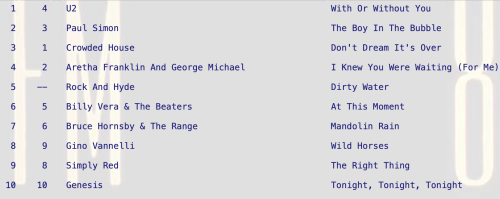
Burnaby (BC) April 27, 1987
Leave a Reply