
#3: You Make Me Feel (Mighty Real) by Sylvester
City: Quebec City (Levis), PQ
Radio Station: CFLS
Peak Month: April 1979
Peak Position in Quebec City ~ #4
Peak position in Vancouver ~ did not chart
Peak Position on Billboard Hot 100 ~ #36
Peak Position on Israeli Singles chart ~ #1
Peak Position on Swiss Singles chart ~ #6
Peak Position on Italian Singles chart ~ #7
Peak Position on UK Singles chart ~ #8
Peak Position on Irish Singles chart ~ #11
YouTube: “You Make Me Feel (Mighty Real)”
Lyrics: “You Make Me Feel (Mighty Real)”
Sylvester James Jr. was born in 1947 in Los Angeles. His father had numerous affairs and left Sylvester’s mother and children when he was a young child. He began singing at the age of three, and sang the Al Jolson 1922 hit, “My Buddy”, at a neighborhood child’s funeral a few years later. Biographer, Joshua Gamson in his book The fabulous Sylvester: the legend, the music, the seventies in San Francisco, describes a view of Sylvester as a boy. The women at his church described him as “feminine” and as “pretty as he could be, just like his mother. He wasn’t rough like the other boys. He was prim and proper. We were always hugging on him and kissing on him, because he was so cute.” Family members also described him as “his own kind of boy — ‘born funny'” — preferring the company of girls and women like his grandmother to that of other boys. “He stayed inside a lot, reading encyclopedias, listening to music, and playing his grandmother’s piano.” When Sylvester would turn down the boys’ invitations to play with them, they would say things like, “He act like a girl!” or “He’s going to be a girl.” But his mother would defend him, including his joy at dressing up in her and his grandmother’s clothes, saying that he was not a girl, just a different kind of boy, and a valued part of their family.
At the age of eight, he was sexually molested by a man at the church — at the time rumored to be the church organist. Sylvester later characterized the occurrence as “consensual.” However, since he was a child and there were injuries caused by the rape, he had to see a doctor. He had more homosexual encounters which his mother was uncomfortable with. He left the church at age 13, and left the family home by the age of 14 after an argument with his mother and his new stepfather.
Aged 15, he began frequenting local gay clubs and built up a group of friends from the local gay Black community, eventually forming themselves into a group which they called the Disquotays. The group held lavish house parties, sometimes (without permission) at the home of their friend, R&B singer Etta James, in which they dressed up in female clothing and wigs, constantly trying to outdo one another in appearance.
Sylvester’s boyfriend during the latter part of the 1960s was a young man named Lonnie Prince; well-built and attractive, many of Sylvester’s friends described the pair as being “the It couple”. Sylvester often hitchhiked around town while in female dress; such activity carried a risk of arrest and prosecution, for cross-dressing was then illegal in California. Although avoiding imprisonment for this crime, he was arrested for shoplifting on several occasions. He found work in a variety of professions, including cooking in McDonald’s —where he was fired for refusing to wear a hairnet —cashier at an airport parking garage, working in a hair salon, at a department store, and as a make-up artist at a mortuary, preparing the corpses for their funerals.
In the 1960s, the Civil Rights Movement was at its peak. But Sylvester and his friends did not take an active role. During the Watts riots (between members of the Black community and the predominantly white police force), they joined in with the widespread rioting and looting. Sylvester and his friends stole wigs, hairspray, and lipstick.
He graduated in 1969 at the age of 21. In his graduation photograph, he appeared in drag wearing a blue chiffon prom dress and beehive hairstyle. Sylvester always considered himself male and began to tone down the feminine nature of his clothing, aiming for a more androgynous look which combined male and female styles and which was influenced by the fashions of the hippie movement.
When the Disquotays disbanded at the end of the sixties, Sylvester had tired of Los Angeles. He was attracted by San Francisco’s reputation as a gay and counter-cultural haven. Arriving in “the city by the bay,” he roomed with a drag troupe called the Cockettes’ for a short while. They were impressed with his falsetto and piano playing skills, and asked him to join them in their show, Radio Rodeo. Sylvester agreed, and one of his first performances involved singing the theme song of The Mickey Mouse Club while dressed in a cowgirl skirt.
Adding to his image, Sylvester used the pseudonym “Ruby Blue” and described himself as “Billie Holiday’s cousin once removed”. Intrigued with Black musical heritage, Sylvester studied the subject and became a collector of what he referred to as “negrobilia.” In some of his Cockette performances, Sylvester camped up racial stereotypes of African-Americans to ridicule the stereotypes themselves.
Sylvester appeared in a spoof film, Tricia’s Wedding, which parodied the June 12, 1971 marriage of Tricia Nixon Cox, daughter of President Richard Nixon.
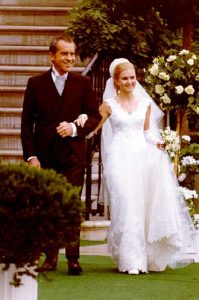
President Richard M. Nixon walking
Tricia Nixon Cox down the aisle (June 12, 19710
In the film, Sylvester played the role of both Coretta Scott King and the African ambassador Uma King. In 1971, Sylvester was given a one-man show, Sylvester Sings, at the Palace Theater.
The Cockettes went to Manhattan in November 1971. Though their show was panned, Sylvester got rave reviews by the New York critics. As a result, he decided to pursue a solo career. In 1972, he formed Sylvester and his Hot Band. They opened that year for a show headlined by David Bowie in San Francisco. Several years later the Hot Band left Sylvester and he eventually found backing singers Martha Wash and Izora Rhodes – known as Two Tons O’ Fun. They would later rename themselves as The Weather Girls.
Exposure at gay clubs in San Francisco led to a contract with Fantasy Records in early 1977. A self-titled debut album was released. It was followed the next year by Step II. A single, “Dance (Disco Heat)”, peaked at #19 on the Billboard Hot 100 and #29 on the UK pop singles chart. It also topped the Billboard National Disco Action Top 30.
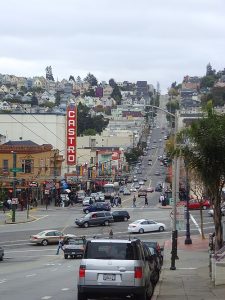
Castro District of San Francisco where Sylvester lived his adult life
The followup release was titled “You Make Me Feel (Mighty Real)”.
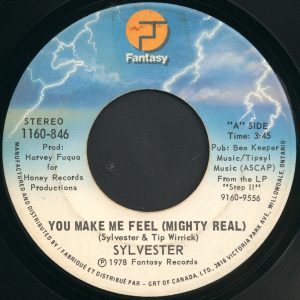
Sylvester co-wrote the song. It is about getting out on the dance floor and making dance moves to emphasize how sexually attracted you are to your partner. The heat is on, and the sensual dance moves reawaken sexual chemistry. After they leave the dance club, back home they feel mighty real from all the touching. Sylvester sings “When we get home and its nice and dark, and the music’s in me, and I’m still real hot; Then you kiss me there and it feels real good…” Mighty real.
“You Make Me Feel (Mighty Real)” peaked at #4 in Quebec City, #12 in Houston, #18 in Fort Lauderdale, and #19 in Miami, Cleveland, and Akron (OH).
Internationally, “You Make Me Feel (Mighty Real)” climbed to number-one in Israel, #6 in Switzerland, #7 in Italy, #8 in the UK, #11 in Ireland, #14 in Austria and Sweden, and #16 in Australia and Belgium. It stalled at #36 on the Billboard Hot 100. It reached number-one on the Billboard National Disco Action Top 30 in the USA, and #2 on the Canadian Dance/Urban chart.
In 2022 Rolling Stone ranked it #39 in their list of “200 Greatest Dance Songs of All Time”. In 2024, Forbes ranked it #13 in their list of “The 30 Greatest Disco Songs of All Time”. In March 2025, Billboard ranked it #17 in their list of “The 100 Best Dance Songs of All Time”, while in June same year, it was ranked #2 in their “The 100 Greatest LGBTQ+ Anthems of All Time”.
Next up, Sylvester released a cover of a 1963 Ben E. King tune titled “I (Who Have Nothing)”. It was also recorded notably by Shirley Bassey and Tom Jones. Sylvester’s cover reached #23 in Ireland and #40 on the Billboard Hot 100 in the fall of 1979. It also reached #4 on the Billboard Dance chart. The song was on his Stars album and his next single was “Stars” which reached #4 on the Billboard Dance Club Songs Chart.
From his 1979 Living Proof live album came “Can’t Stop Dancing” which peaked at #2 on the Dance Club Songs chart. The next year Sell My Soul included the single “Sell My Soul”/”Fever” – the latter a cover of the 1956 Little Willie John R&B smash hit. Sylvester’s cover of the song peaked at #6. In 1981, Sylvester collaborated with Herbie Hancock on the jazz great’s Magic Windows album on the track “Magic Number”. The single climbed to #9 on the National Disco Action Top 30.
In 1982, Sylvester had an international hit with “Do You Wanna Funk”. The song asked a question that sounded like “Do you wanna f*ck”.
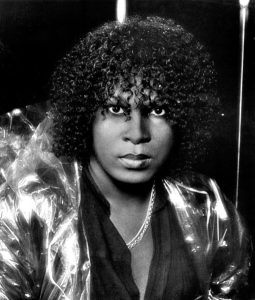
It reached #5 in Belgium and Finland, #8 in Norway, #12 in Switzerland, #14 in the Netherlands, #24 in Australia and #30 in West Germany. As well, “All I Need” was a #3 dance chart hit in the USA. In 1985, “Take Me To Heaven”/”Sex” was a #6 dance hit.
In 1986, he released the album Mutual Attraction. His debut single was a cover of Stevie Wonder’s 1973 song “Living For The City”. The song reached #2 on the Billboard Hot Dance/Disco Club Play chart. Sylvester had his second and final number-one hit on the US dance chart with “Someone Like You”. The following year “Mutual Attraction” was a #10 dance hit in the USA.
In 1987 he contracted AIDS. Sylvester attended the Castro’s 1988 Gay Freedom Parade in a wheelchair, being pushed along by McKenna in front of the People with AIDS banner; along Market Street, assembled crowds shouted out his name as he passed. The subsequent 1988 Castro Street Fair was named “A Tribute to Sylvester”. Although he was too ill to attend, crowds chanted his name to such an extent that he was able to hear them from his bedroom. Sylvester died at the age of 41 in December 1988.
During the late 1970s, Sylvester gained the moniker of the “Queen of Disco”, a term that continued to be given to the singer into the 21st century. In 2006, Joshua Gamson’s The Fabulous Sylvester: the legend, the music, the seventies in San Francisco won the 2006 Stonewall Book Award for nonfiction. In August 2014, an Off-Broadway musical titled Mighty Real: A Fabulous Sylvester Musical opened at Theatre At St. Clement’s on West 46th Street in Manhattan. That year Sylvester was one of the inaugural honorees in the Rainbow Honor Walk, a walk of fame in the Castro District.
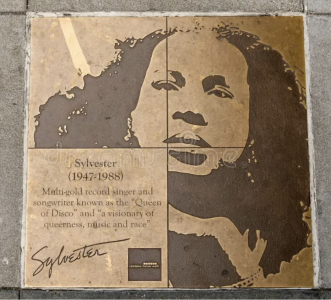
A bronze plaque commemorating Sylvester is near the intersection of Castro Street and 18th Street.
Sylvester released eleven studio albums and one live album during his career. In 2019, “You Make Me Feel (Mighty Real)” was selected by the Library of Congress for preservation in the National Recording Registry for being “culturally, historically, or aesthetically significant.” In his Turn the Beat Around: The Secret History of Disco, Peter Shapiro described “You Make Me Feel (Mighty Real)” as Sylvester’s “greatest record”, “the cornerstone of gay disco”, and “an epochal record in disco history”. Shapiro noted that Sylvester’s work brought together elements from both of the main strands of disco; the “gospel/R&B tradition” and the “mechanical, piston-pumping beats” tradition, but that in doing so he went “way beyond either.” Shapiro expressed the view that “Sylvester propelled his falsetto far above his natural range into the ether and rode machine rhythms that raced toward escape velocity, creating a new sonic lexicon powerful, camp, and otherworldly enough to articulate the exquisite bliss of disco’s dance floor utopia.”
December 19, 2025
Ray McGinnis
References:
Joshua Gamson, The Fabulous Sylvester: the legend, the music, the seventies in San Francisco, (Picador, 2006) pp. 17-24.
Jamie Ferrell, “The Castro’s Historic ‘Rainbow Honor Walk’ Commemorates LGBTQ+ Pioneers,” Secret San Francisco.com, June 10, 2022.
Peter Shapiro, Turn the Beat Around: The Secret History of Disco, (Faber and Faber, 2005).
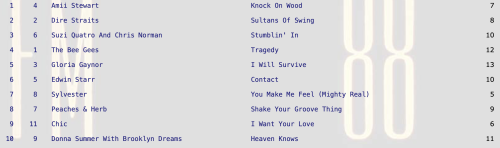
“You Make Me Feel (Mighty Real” spent seven weeks in the Top Ten on CFLS
(above) Top 40 CFLS-920 AM, Quebec City, (PQ) April 19, 1979
The song may not have charted in Toronto but during my disco days you could not help hearing this tune in nightclubs – it was infectious and got you up on the dance floor.