
#171: Little Bitty Pretty One by Clyde McPhatter
City: Montreal, PQ
Radio Station: CJAD
Peak Month: August 1962
Peak Position in Montreal ~ #5
Peak Position in Vancouver ~ did not chart
Peak Position on Billboard Hot 100 ~ #25
YouTube: “Little Bitty Pretty One”
Lyrics: “Little Bitty Pretty One”
Clyde McPhatter was born in the historic African-American district of Hayti in Durham, North Carolina, on November 15, 1932. Starting at the age of five, he sang in his father’s Baptist church gospel choir along with his three brothers and three sisters. When he was ten, Clyde was the soprano-voiced soloist for the choir. When his family moved to Harlem after he graduated, Clyde formed a gospel group, the Mount Lebanon Singers. They performed across churches in the region. In 1950, after winning the coveted Amateur Night at Harlem’s Apollo Theater contest, McPhatter returned to his job as a grocery store manager. He was discovered singing the choir in the Holiness Baptist Church of New York City by Billy Ward, front man with his Dominoes. Ward recruited McPhatter into the group.
Music critic, Jack Watkins reveals, Billy “Ward wanted McPhatter to sing like Bill Kenny, The Ink Spots’ lead tenor. Thankfully, his young recruit had no intentions of following this conservative template and tepidly crooning creaky Tin Pan Alley songs. On the tracks Billy Ward and The Dominoes recorded for Federal and King from 1950, he can be heard utilising the melismatic dynamics of gospel singing on secular material. As an early exponent of this approach, even now it’s easy to imagine the freshness of his sound, and how directly his angelic voice must have reached out to young black audiences, firing up a generation of would-be R&B and soul stars.”
McPhatter was present for the Dominoes 1951 recording of “Sixty Minute Man”. Clyde McPhatter’s backing falsetto vocal calls – including “Don’t stop” – provided the energy that helped make the song a hit. “Sixty Minute Man” topped the R&B charts in the USA for 14 consecutive weeks, and crossed over to the pop charts where it climbed to #17. Clyde McPhatter’s tenor vocals were a strong influence on other singers including Sammy Turner, Marv Johnson, Smokey Robinson, Ben E. King, and others. In Bill Millar’s book, The Drifters, the author states “McPhatter took hold of the Ink Spots’ simple major chord harmonies, drenched them in call-and-response patterns, and sang as if he were back in church. In doing so, he created a revolutionary musical style from which—thankfully—popular music will never recover.”
Clyde McPhatter remained with Billy Ward and his Dominoes for their number-one hit in 1952, “Have Mercy Baby”. The single topped the Cashbox R&B chart for a dozen weeks. It was based on the gospel tune “Have Mercy Jesus”. Late in ’52, McPhatter took the lead on the Dominoes single “The Bells”, which reached #3 on the R&B chart in early 1953. Later that year, McPhatter was on the Dominoes recording of “These Foolish Things (Remind Me of You)” peaking at #1 on the R&B chart.
As a member of the Dominoes, McPhatter did not earn much money. Billy Ward paid him $100 a week, minus deductions for food, taxes, motel bills, etc. In an interview in 1971, McPhatter told journalist Marcia Vance, “whenever I’d get back on the block where everybody’d heard my records—half the time I couldn’t afford a Coca-Cola.” Clyde McPhatter left the Dominoes on May 7, 1953.
In June 1953, he was approached by Atlantic Records executives and signed to the label. A group was formed called the Drifters, featuring Clyde McPhatter. On November 14, 1953, “Money Honey” cracked the Top Ten on the Cashbox and Billboard R&B charts. The following week it began an eleven-week run on the top of the Billboard Best Sellers R&B chart from November 21, 1953 to January 30, 1954.
McPhatter presented as a new kind of black Rhythm and Blues star, boyish and slim compared to mature looking blues shouters like Big Joe Turner and Wynonie Harris. Clyde was lean compared to more ample, portly, performers like Fats Domino, Ivory Joe Hunter, Bill Doggett, Lowell Fulson, and Amos Milburn, or the literally flat-footed Roy Brown. And Clyde McPhatter wore shiny suits, and patent boots on stage. Jackie Wilson was among those who closely studied his moves, noting their impact on adoring females in the audience.
Subsequently, “Such A Night” climbed to #2 despite being banned by some radio stations as too “racy.” It spent 14 weeks in the Top Ten on the Cashbox R&B Top 15 chart. In the summer of ’54, “Honey Love” was a number-one hit for Clyde McPhatter and the Drifters for eight consecutive weeks on the Billboard Juke Box R&B chart, and Best Seller R&B chart. In the winter of 1954-55, the group covered the Bing Crosby chestnut, “White Christmas”, which reached #2 on the Billboard R&B chart.
Music critic, Jack Watkins, comments, “On particularly intense songs McPhatter would make as if his body had been struck by lightning, stiffening his back and throwing his gaze upwards, before sinking to his knees, moaning and sobbing. Smokey Robinson observed that while young black contemporaries admired the singing of Sonny Til of The Orioles, they didn’t want to be him, whereas McPhatter was “The Man”…. his impact crossed the colour divide. Elvis Presley was among many young whites moved by McPhatter, ensuring he caught his act every time he performed in Memphis, and once confessing he wished his voice ‘sounded more like Clyde’s’.”
In late 1954, McPhatter was inducted into the U.S. Army and assigned to Special Services in the continental United States, which allowed him to continue recording. After his tour of duty, he left the Drifters and launched a solo career. However, before McPhatter left he was lead vocalist on “Whatcha Gonna Do”. It reached #2 for the Drifters when the single was released in the spring of 1955, spending a dozen weeks in the Top Ten of the R&B charts.
Clyde McPhatter went on to have a successful solo career. In 1955, in a duet with Ruth Brown, “Love Has Joined Us Together” reached #8 on the R&B chart. 1956 started off with a #2 R&B hit titled “Seven Days”. His next outing, “Treasure of Love”, peaked at number-one on the Billboard Juke Box R&B chart in July 1956, and crossed over to the pop charts reaching #16.
As well, in 1956 Clyde McPhatter was one of the recording acts who took part in The Biggest Rock n’ Roll Show of 1956 45-date tour. It was headlined by Billy Haley and the Comets. All the acts except the headliner were black. In the aftermath of Rosa Parks protest on a bus in Montgomery, Alabama, racial tensions were peaking across America. With rock n’ roll appealing to both white and black teenagers – and police and politicians at times eager to exploit this – the potential for trouble existed at every tour stop. Several shows were cancelled because of racial troubles, bomb threats, protests, pickets, and violence. However, the tour was a big success with two dates being added, making it a 47-date tour.
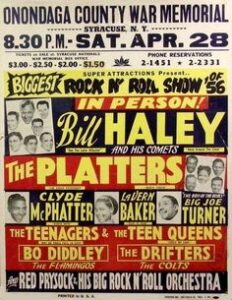
In addition to the names appearing on the poster above in Syracuse, New York, other acts who were at most stops on the tour included Shirley & Lee, Roy Hamilton, Five Keys, and The Turbans. The sellout crowd in Syracuse numbered 10,500. On April 29, 16,000 fans showed up at The Forum in Montreal. The next night, 13,000 turned out in Maple Leaf Gardens in Toronto. The Toronto press badgered Bill Haley about whether or not rock and roll was “dangerous.”
In 1957, “Without Love (There Is Nothing)” climbed to #4 on the R&B charts and cracked the Top 20 on the pop charts. The song was covered successfully by Tom Jones who made it a number-one hit in Canada in February 1970. Another Top Ten R&B hit for McPhatter in 1957 was “Just To Hold My Hand”, which reached #5 in Toronto. Clyde McPhatter covered a song titled “Long Lonely Nights”, originally recorded by Lee Andrews & the Hearts. It was McPhatter’s version that topped the Billboard R&B chart in 1957.
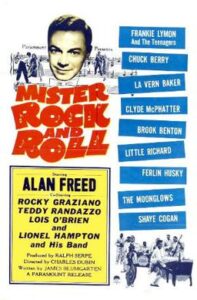
That year McPhatter appeared in the Alan Freed biopic Mr Rock’n’Roll, lip-synching another single “Rock And Cry”, and its B-side ballad, “You’ll Be There”. Other acts in the film included Frankie Lymon and The Teenagers, Chuck Berry, LaVern Baker, Brook Benton, Little Richard, Ferlin Husky, The Moonglows, Lionel Hampton, and Teddy Randazzo.
In 1958, Clyde McPhatter started the year off with a #3 hit on the Billboard R&B chart with “Come What May”. While in December ’58, a song written by Brook Benton titled “A Lover’s Question” became Clyde’s third solo number-one hit on the Billboard R&B chart. The single also reached #6 on the Billboard Hot 100. While in 1959, McPhatter covered The Clovers number-two hit from 1954 titled “Lovey Dovey”. The song was subsequently covered again by Buddy Knox in 1960 and became a Top 30.
In 1959, McPhatter left Atlantic Records and signed with MGM Records. However, five single releases in 1959-60 resulted only in marginal sales. Consequently, the recording artist switch labels and moved over to Mercury Records. The move found Clyde McPhatter back in the Top Ten reaching #7 on the Billboard R&B chart with “Ta Ta”. The song featured strings, and resembled arrangements that year for Brook Benton and Dinah Washington, and also crossed over to the pop charts peaking at #23.
In 1962, singer-songwriter Billy Swan wrote “Lover Please”. Clyde McPhatter’s recording earned him a final Top Ten hit that climbed to #7 on the Billboard Hot 100. It also reached #6 in Norway. In Canada, it peaked at #2 in Calgary, and #3 in Ottawa. The song reached #3 on the Cashbox Top 50 R&B chart.
His followup release was “Little Bitty Pretty One”.
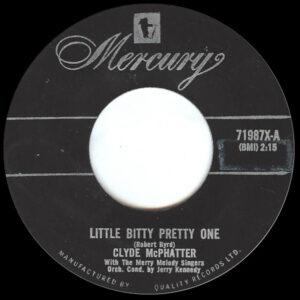
“Little Bitty Pretty One” was written by Bobby Day. Born in 1928 in Fort Worth, Texas, with the birth name Robert Byrd, he moved to Los Angeles at age 15. His first recording was “Young Girl” in 1949 in the R&B group the Hollywood Flames. The song was released in 1950. He went several years with minor musical success limited to the West Coast. He recorded under numerous other names credited to The Jets, The Voices, The Sounds, The Crescendos. He was the original “Bob” in the duo Bob & Earl with singer Earl Nelson (a duo who had a hit in 1964 titled “Harlem Shuffle”). As a member of the Hollywood Flames, he used the stage name Bobby Day. Day’s penned the groups only hit, “Buzz-Buzz-Buzz” which peaked at #11 on the Billboard pop chart and #5 on the R&B chart in 1957. Later in 1957, Day formed his own band called the Satellites. With the group, Day recorded three songs that are seen today as rock and roll classics.
The first of these, “Little Bitty Pretty One”, was originally released by Bobby Day and the Satellites. It stalled at #57 on the Billboard pop chart, but spent three weeks at number-two on the Cashbox Top 25 Rhythm & Blues chart in November-December of ’57. In Canada, Bobby Day’s tune topped the pop charts in Toronto and Winnipeg. However, it was a cover by Thurston Harris that outsold Bobby Day’s original, reaching #6 on the Billboard pop chart. In 1960 Frankie Lymon covered “Little Bitty Pretty One” which charted to #58 on the Hot 100.
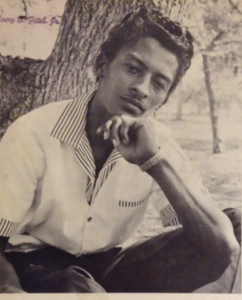
Bobby Day (1957)
Bobby Day’s second hit backed by The Satellites was “Rockin’ Robin”. The single reached number-one on the Billboard Rhythm and Blues Records chart, #2 on the Billboard Hot 100, and #9 in Australia. It spent three weeks at #2 in Winnipeg on CKY and eleven weeks in the Top Ten. Michael Jackson covered the song in 1972 and it topped the pop chart in both Sweden and the USA (Cashbox Top 100 Pop Singles chart). Day’s third notable single was titled “Over and Over”. It topped the R&B charts in 1958, but stalled at #41 on the Billboard Hot 100. However, in Toronto “Over And Over” climbed to #3. In 1965, the Dave Clark Five covered the song and it reached number-one in both Canada and the USA. The cover also reached #2 in Sweden, #3 in Malaysia and New Zealand, and #6 in Singapore.
A subsequent release by Bobby Day in 1958 sought to capitalize on the popularity of “Rockin’ Robin”. However, “The Bluebird, the Buzzard, and the Oriole” stalled at #54 on the Hot 100. He kept on recording some rockin’ tunes. These include a song about a “Teenage Philosopher” ‘from KC’ (Kansas City). But the 1960 release got little traction. He released a cover of the five-million Gene Austin number-one hit from 1927, “My Blue Heaven”. But DJs mostly gave it a pass.
Separately, Bobby Day remained one half of the duo Bob & Earl until 1962. Bobby Day died at the age of 62 of prostate cancer in 1990.
“Little Bitty Pretty One” reached #5 in Montreal, Allentown (PA), and Jefferson City (MO), #6 in Washington DC, #8 in Rockville (MD), #11 in Akron (OH), and #12 in Vancouver (WA).
In 1963, Clyde McPhatter managed one last Top Ten R&B hit titled “Deep in the Heart of Harlem”. The pretty song depicted a hardscrabble life in the inner city. The social commentary may have been ahead of its time. It evokes a cross between “On Broadway” by The Drifters, and “A Change Is Gonna Come” by Sam Cooke.
…I feel the tenement coming alive,
another working day I gotta survive.
Fighting the foreman from 8:30 to 5,
to make a dollar so I can live,
deep in the heart of Harlem.
…I push and kick and get my feelings hurt downtown,
I’m just a little spoke that helps the wheel goes around.
If I was rich maybe I’d move away,
out to the country where my kids could play.
But I can’t make it on my poor man’s pay,
we gotta stay here, can’t get away,
can’t get away from Harlem.
Three more releases with MGM failed to generate much sales. Though “Crying Won’t Help You Now”, his last release with MGM in 1965, is an overlooked gem.
The latter half of the sixties, Clyde McPhatter searched for the right fit in the changing music scene. He faced an uphill battle with the British Invasion, the new Motown sound, baroque rock, folk-rock, garage band, and psychedelic rock rounds. McPhatter’s gospel-influenced moved through record contracts with Amy Records, Dream, B&C, and finally Decca. However, all ten single releases on these various labels between 1965 and 1970 failed to chart. In addition, when he had a concert, sometimes he’d show up drunk, miss concerts entirely, or deliver uneven shows that broke fans hearts.
Record Collector Magazine depicted this time in Clyde McPhatter’s life. “In 1968, in an attempt to boost a flagging career which was missing out on the soul boom, McPhatter had moved to England. Perhaps he’d recalled the happier times of 1960 when he’d been part of a package tour featuring Bobby Darin and Duane Eddy, and had overestimated the extent of his following. Whatever the reasoning, the reception this time round was depressing – a few gigs in small clubs, some tracks cut for minor labels which didn’t sell and, most humiliatingly, a court case after his arrest for importuning young men, or “loitering with intent” – the charge was dropped – in which the miserable state of his finances was publicly laid bare. He’d returned to the US in 1970, broken now as much in spirit as in pocket, and increasingly unable to perform without alcoholic stimulation…. In the summer of 1972, having been fired after stumbling about the stage, kissing his pianist and unzipping his fly during one of his last live performances, McPhatter was found dead in a Bronx apartment after another heavy drinking session. The causes of death were reported as liver, heart and kidney failure. He was 39.”
Hopes for a major comeback with a Decca album were crushed on June 13, 1972, when he died in his sleep at the age of 39, of complications of heart, liver, and kidney disease, brought on by alcohol abuse. R&B singer, Ruth Brown, who had a string of number-one hits including “Mama, He Treats Your Daughter Mean”, had been romantically involved with Clyde McPhatter in the 1950s. He fathered a child with her named Ronnie David McPhatter. The “Queen of R&B” thought towards the end of his life, “McPhatter was terrified that his gay tendencies would leak out to the press, and drank to hide his guilt and shame.” Being the son of a Baptist minister, it would have been troubling to be attracted to members of both sexes. I haven’t read Ruth Brown’s memoir. Clyde McPhatter was married to Lena Rackley from 1965 until his death in 1972. They had one son named Patrick.
The New York Times ran a brief obituary after his death, getting Clyde McPhatter’s age wrong:
“Clyde L. McPhatter, a rock and soul singer who formed The Drifters in the 1950’s, died Tuesday, apparently of a heart attack, while visiting friends in the Bronx. He was 41 years old and lived at 142 Garden Street, Teaneck, N. J. Mr. McPhatter had also sung with Billy Ward’s group, The Dominoes. He recorded several ‘Gold Label’ numbers, including ‘Money Honey,’ ‘Treasure of Love,’ ‘Without Love’ and ‘The Best Man Cried.’ Surviving are his widow, the former Lena Rackley; a son, Patrick; his parents, Mr. and Mrs. George McPhatter Sr.; three brothers and three sisters.” Curiously, the paper of record opted to place a hyphen in place of the letter “c” in the singers surname. Was the writer of the New York Times obituary familiar with Clyde McPhatter’s career? The obituary mentions four songs associated with the singer. The first three are unquestionably among his biggest hits. But “The Best Man Cried”? In 1962, that song stalled in at #118, below the Billboard Hot 100. The song didn’t chart in any radio markets in New York State, Pennsylvania, New Jersey, or any of the New England states. One can imagine ‘Times subscribers reading the obituary and scratching their heads to recall “The Best Man Cried”.
Scant contemporary coverage of Clyde McPhatter’s passing reflected his low profile a decade since his last Top 40 pop hit. His last words to a reporter a month before he died were, “I have no fans.” He was inducted into the Rock and Roll Hall of Fame in 1987 by Ben E. King. In his remarks, King stated, “The unlikely star that guided music towards soul. Clyde McPhatter injected R&B with the unrestrained emotional zeal of gospel music. He was one of many to cross over from the sacred to the secular, but his high tenor was one of a kind. He built a foundation for me to be a person.”
The United States Postal Service issued a stamp in McPhatter’s honor in 1993.
“Money Honey” by Clyde McPhatter and the Drifters was inducted into the Grammy Hall of Fame in 1999.
Clyde McPhatter has been inducted into the Rockabilly Hall of Fame, and the North Carolina Music Hall of Fame. In October 2020, Clyde McPhatter’s exhibit opened in the North Carolina Museum of History, named “The Beach Music Exhibit”. This exhibit was complete with interviews and memorabilia supplied by his daughter Deborah, board chair of the North Carolina Music Hall of Fame.
In 2023, Rolling Stone magazine ranked McPhatter at number 99 on its list of the 200 Greatest Singers of All Time.
April 6, 2026
Ray McGinnis
References:
“Clyde L. M’Phatter,” New York Times, June 15, 1972.
“The Clyde McPhatter Story: The Legend Who Died Believing He Had No Fans,” YouTube.com, September 25, 2025.
Jack Watkins, “The Trouble With Clyde,” Record Collector Magazine, November 30, 2012.
Jack Watkins, “Spotlight on Soul – The Clyde McPhatter Story,” Vintagerockmag.com, November 1, 2024.
Billy Ward & The Dominoes, “Sixty Minute Man“, Federal Records, 1951.
Clyde McPhatter and The Drifters, “Money Honey“, Atlantic Records, 1953.
Clyde McPhatter, “Treasure Of Love“, Atlantic Records, 1956.
Clyde McPhatter, “You’ll Be There“, Mr. Rock and Roll, 1956.
Clyde McPhatter, “Without Love (There Is Nothing)“, Atlantic Records, 1957.
Clyde McPhatter, “Just To Hold My Hand“, Atlantic Records, 1957.
Clyde McPhatter, “Long Lonely Nights“, Atlantic Records, 1957.
Clyde McPhatter, “A Lover’s Question“, Atlantic Records, 1958.
Clyde McPhatter, “Lovey Dovey“, MGM Records, 1959.
Clyde McPhatter, “Lover Please“, MGM Records, 1962.
Clyde McPhatter, “Deep In the Heart of Harlem“, Mercury Records, 1963.
Clyde McPhatter, “Crying Won’t Help You Now“, Mercury Records, 1965.
Bobby Day, “Rockin’ Robin“, The Art Laboe Show, November 19, 1958.
“200 Greatest Singers of All Time,” Rolling Stone, January 1, 2023.
Ben E. King, “Clyde McPhatter: Inducted,” Rock and Roll Hall of Fame, 1987.
“The Biggest Rock n Roll Show of 1956,” A Rock n Roll Historian, February 1, 2016.
Kelly Greig, “CJAD 800 Radio celebrates 80 years, reflecting on eight decades of Montreal history,” CTV, December 8, 2025.
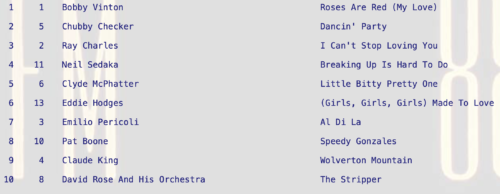
CJAD 800-AM Montreal (PQ) | August 4, 1962
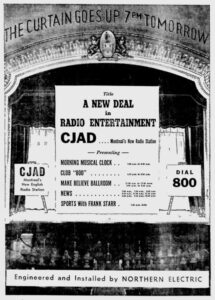
CJAD got its start on Montreal airwaves in December 1945. It billed itself as “Montreal’s new English radio station.” By the late 50s and early sixties it was one of the most listened to radio stations in the greater Montreal area. Around the time Clyde McPhatter was on the August CJAD chart with “Little Bitty Pretty One”, CJAD had an advertisement with this pitch, anticipating the end of summer: “Vacations* are wonderful, but isn’t it grand to be back home back to work, and back to school to old friends pictured on this page? With your radio at 800 you’ll recapture the enjoyment of listening to CJADs personalities* and the many entertainment features they bring to you – the kind of radio you expect from CJAD. You’ll find that as usual you get the news first on CJAD as well as the best from the world of music.” (Possibly, the ad was worded to encode ear worms referencing song titles like “Personality” by Lloyd Price, and “Vacation” by Connie Francis – the latter that reached #4 on CJAD’s record survey for two consecutive weeks later that August ). The ad featured photos of CJAD’s DJs at the time: Vance Randolph, Mike Stephens, Doris Clark, Andy Walsh, Ralph Kirchen, and Leslie Roberts.
Leave a Reply